
Smart glasses are quickly becoming a niche product and are turning into a mainstream wearable technology. They are a blend of style, functionality, and high-tech computing in 2026 to provide a smooth, hands-free digital experience. You may be interested in productivity, entertainment or content creation, and knowing smart glasses will get you to make a smarter purchasing choice.
Table of Contents
What Are Smart Glasses?
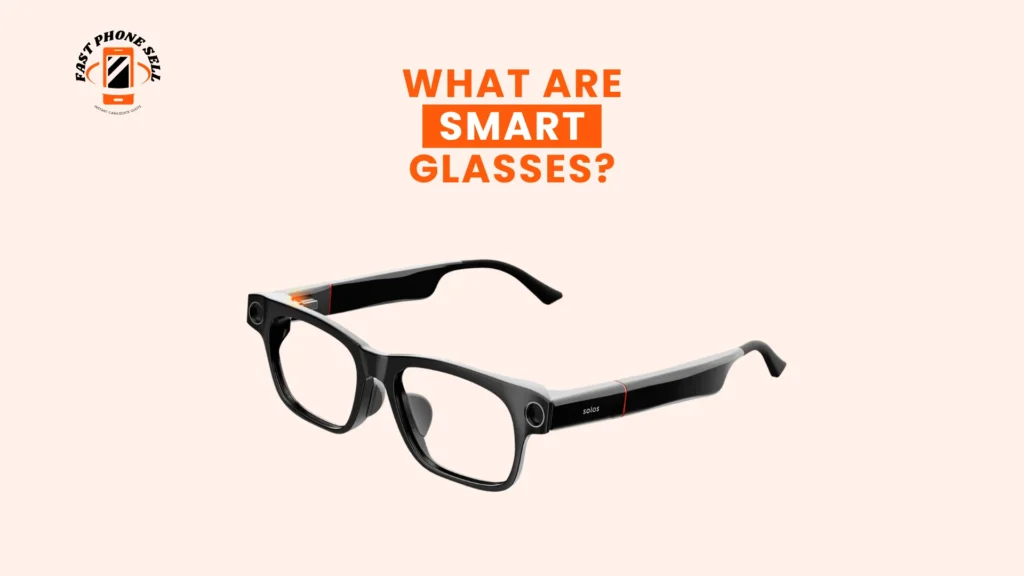
Smart glasses are wearables that mimic conventional eyewear, but they have advanced digital capabilities. These glasses have inbuilt electronics like microphones, speakers, cameras, and at times augmented reality displays unlike normal eyewear.
In essence, smart glasses are meant to minimize the need to use smartphones by having the necessary digital features right before your eyes or somewhere within sound distance. This enables users to engage more in their use of technology as they do not have to look at a screen all the time.
Over time there has been a tremendous development of smart glasses. Early prototypes were heavy and crude, and the modern is slim-bodied, sleek, and full of AI-powered features. Nowadays, they are a compromise between mobile phones and full immersion AR wearables.
How Does Smart Glass Work?
To know how does smart glass work, one should consider the technologies which drive it. Smart glasses are smart devices that run on hardware and software in real-time.
Core Technology Behind Smart Glasses
Smart glasses are dependent on augmented reality, artificial intelligence, and miniaturized computing. AR enables digital objects like navigation arrows or notifications to be displayed in your view. Artificial intelligence leads to the enhancement of the experience through voice command functionality, real-time translation, and contextual awareness.
Meanwhile, a head-up display system displays information as lenses or a small screen that is close to the eye. This makes it possible to have a form of experience where digital content is used to complement the real world and not to substitute it.
Internal Components and Functionality
The smart glasses have a small processor, sensors and connectivity modules inside the frame. The cameras record the images or video, and the sensors monitor the movement, the light conditions, and in some cases, the location of the eyes. The sound is broadcasted using open-ear headphones or bone induction technology, which enables the user to be conscious of his environment.
The working process is easy and resolute. When a user commands the device (be it by voice or touch), the information is processed by the device and the output is provided in visuals or sound, or a combination of the both. As an illustration, asking questions like where to go will immediately indicate your way without necessarily looking at a phone.
Types of Smart Glasses in 2026
The smart glasses market is not uniform and each type is meant to be used in a particular situation. Knowledge about these types assists users to select the appropriate device to suit their requirements.
Audio Smart Glasses
Audio smart glasses are more concerned with the sound features. They enable users to listen to music, receive calls and communicate with voice assistants without clogging their ears. They are light in weight and look just like ordinary sunglasses hence can be used on a daily basis.
Smart Glasses with Camera
smart glasses with camera are one of the most rapidly expanding segments. These devices enable the users to take photos and videos in a first person point of view. They are particularly popular with the content creators, vloggers, and travelers as they offer an experience of hands-free recording.
Augmented Reality Smart Glasses
AR smart glasses are more updated and provide visual overlays. They are able to show the navigation directions, notification, and even virtual screens. They are usually applied in business and professional settings like engineering, healthcare, and tele-working.
AI-Powered Smart Glasses
The future of wearable technology is AI smart glasses. They are able to identify objects, translate languages on the fly and offer contextual support. These are what make them very useful both in personal and professional life.
Best Smart Glasses in 2026
The selection of the best smart glasses will be determined by your needs be it style, functionality, or advanced features. There are a number of brands that have become leaders in this area.
Premium and Feature-Rich Options
One of the most suitable overall options is the Ray-Ban Meta Smart Glasses. They are fashionable and functional, and they have built-in cameras, audio, and social media integration. Such glasses are specifically attractive to the users who would like to have a compromise between style and performance.
The Amazon Echo Frames is another good competitor. They are targeted at users who like voice recognition and smart assistant capabilities. They lack a camera, but it does not mean that they are not comfortable or usable in daily life.
The Xreal Air AR Glasses gives an immersive visual experience to users of augmented reality. They are perfect to consume content, play games or do work on virtual displays.
Budget-Friendly Alternatives
Budget smart glasses can also be used by those users who require simple features like audio playback and calls. Even though they might not be as advanced as AR or high-quality cameras, they are an excellent starting point in the field of wearable technology.
Smart Glasses Use Cases
Smart glasses are not simply a novelty, since they can be used in various spheres of life in a practical manner.
Everyday Convenience
To use in everyday life, smart glasses help in the daily routine of making calls, listening to music, and receiving notifications. Their hands-free quality makes them particularly handy during a drive, a walk or multi-tasking.
Travel and Navigation
Smart glasses are of much benefit to travelers. The overlay feature and translation features of real-time navigation allow users to navigate new locations without having to look at their phones all the time.
Work and Productivity
Smart glasses are useful in the business environment by boosting productivity through remote working, providing instructions, and real-time information. Such fields as the healthcare industry and engineering are already reaping these advantages.
Content Creation and Accessibility
Smart glasses enable content creators to create distinctive videos with first-person perspectives. Concurrently, the accessibility oriented features help the visually impaired users by labeling objects and reading text aloud.
How Much Is Smart Glass?
One of the most frequent questions in the search how much is smart glass. Prices are very different based on features and brand.
Price Ranges Explained
The smart glasses that are of entry level are priced between 100-300 dollars. These models are concerned with simple audio and connectivity. Mid-range products costing between 300 and 700 dollars, most of them come with cameras and better design quality.
High-end smart glasses costing up to 700 and above are more advanced with augmented reality displays, AI and high-end materials.
Factors That Influence Cost
Pricing is influenced by a number of factors such as display technology, camera quality, battery life and software capabilities. AR displays and AI devices are more likely to be pricier because they are more complicated.
Smart Glasses UAE – Buying Guide
In terms of users seeking smart glasses UAE, the market has a number of choices online and offline.
Availability in the UAE
In large cities such as Dubai and Abu Dhabi, smart glasses can be found on large online shopping sites and electronics stores. The international brands and the regional sellers are one of the choices available to the consumers.
Pricing in AED
In the UAE, the market price of smart glasses can be from AED 400 to AED 2,500 and above, depending on the features and brand. AR-enabled premium models would be at the higher part of this spectrum.
Important Buying Considerations
Prior to making a purchase, compatibility with your smartphone, warranty, and authenticity of the product should be considered. Another factor to be considered by the buyers is whether they require features related to the camera or just want privacy-related models that do not have any recording device.
Pros and Cons of Smart Glasses
Smart glasses represent the perfect combination of functionality and the novelty, yet they are not devoid of restrictions.
Advantages
Hands-free functionality can be listed among the largest benefits as it enables the user to remain connected without any distractions. Because AI is integrated with real-time information, it increases productivity and efficiency. Also, they are fashionable with contemporary designs that could be worn on a daily basis.
Disadvantages
Nevertheless, little battery life and more expensive advanced models are still an issue with smart glasses. Another factor that is considered is privacy issues, particularly with devices that have cameras. The users also need to learn to behave differently with the technology.
Smart Glasses vs Smartphones vs AR Headsets
Comparing smart glasses with smartphones and AR headsets, one will realize that they are used to perform various functions.
Smartphones are the most multi-purpose devices, though they have to be constantly operated manually. AR headsets offer the complete immersion experience but are oversized and not as convenient to use in everyday life. Smart glasses on the other hand are a middle ground, as they provide the convenience of being portable and hands-free and yet not obtrusive.
Future of Smart Glasses
The future of smart glasses is highly dependent on the development of artificial intelligence and wearable computing. With the advancement in technology, these devices will be made lighter, powerful and cheaper.
In the future, it can be enhanced with further health monitoring, integration of AI, and a completely uninterrupted connection with other smart devices. In the long run, smart glasses would substitute smartphones in most of the daily activities making them a necessity in our daily lives.
Final Verdict
Smart glasses are no longer a matter of experimentation, but a functional device in real life. They present a distinct blend of ease, innovation and style that is attractive to a diverse audience.
Smart glasses are a valuable investment to people who desire hands free technology, increased productivity and a glimpse into the future of wearables. Their value and usefulness will only be enhanced as the technology keeps on evolving.
FAQs About Smart Glasses
What do smart glasses do?
Smart glasses can be used to access digital features like calls, navigation, media playback, and AI help hands-free.
Are smart glasses worth it?
Users who place a premium on convenience, productivity, and state-of-the-art technology will find it worth it, particularly when traveling or creating content.
Can smart glasses record video?
Yes, numerous models have the built-in cameras that are able to make the photos and videos in the first-person perspective.
Do smart glasses need internet?
Though not all functions are online, the advanced features will need an internet or a smartphone connection.
Are smart glasses safe?
Smart glasses are not considered too dangerous to wear, though one should not forget about privacy and responsible usage.