
Virtual reality is now one of the hottest technologies of the digital age. Starting with immersive games and moving to professional training simulations, VR is changing the way individuals engage with digital content. In case you are curious about what is VR, it is the technology that enables the creation of a computer-generated space where users can go and engage with it as if they were physically there.
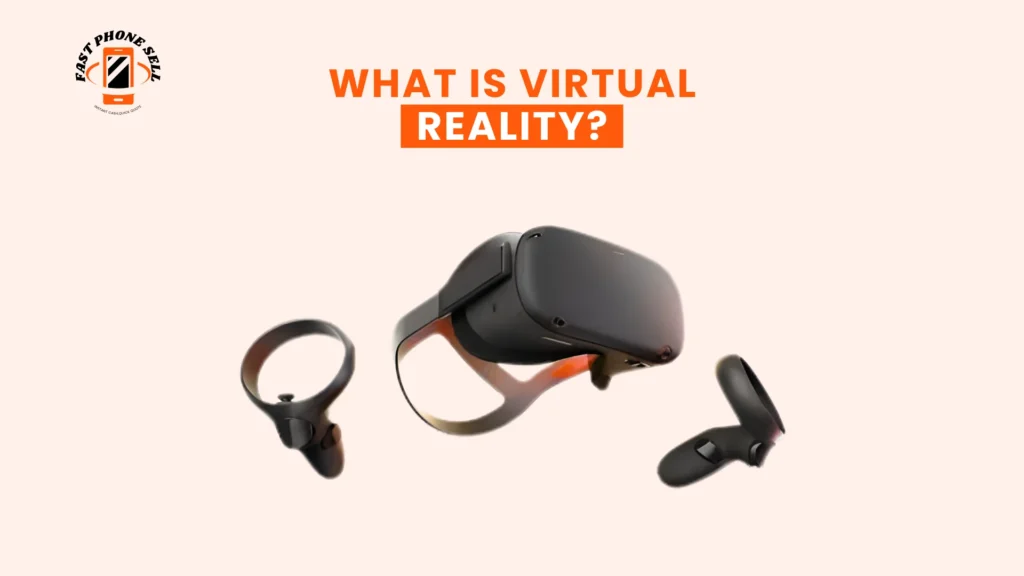
The VR involves special equipment, including headsets and motion controllers, to provide an illusion of real-life settings. Users do not see the content displayed on a flat screen, but rather the three-dimensional world around them reacts to their movements. This virtual reality makes VR far unlike a conventional digital medium.
Here, you are going to learn what is the meaning of VR, how virtual reality works, what is VR gaming, and what is the difference between AR and VR.
Table of Contents
What Is VR?
Virtual reality VR, also referred to as virtual reality, is a computer technology that emulates the experience of a three-dimensional environment where users have the opportunity to engage with virtual objects and spaces. This experience is realistic, they respond to the real time movements of the user.
When a person employs virtual reality, he or she usually wears a headset covering his or her eyes and shows a 3D virtual reality. The headset follows the movements of the head, and re-renders the view as the user moves their head, enabling them to turn their heads in a natural way. This gives the illusion of being in the virtual world and not viewing it on a screen.
VR has the capability to replicate actual places like cities, classrooms or workplaces, or it can create imaginary worlds that are not real-life. This ability renders virtual reality practical in the field of entertainment, learning, and training.
Virtual reality is concerned with immersion, or feeling that the user is in the virtual world. It is the feeling of presence that distinguishes VR among the conventional digital experiences.
What Is the Meaning of VR?
VR as an acronym means Virtual Reality, a computer-generated world that makes it seem like you are experiencing something real or imagined. VR definition The definition of VR is a digital environment that is interactive, and the user can move around and interact as a natural environment.
Virtual reality is a blend of various technologies such as 3D graphics, motion sensors, tracking, and spatial sound. These technologies collaborate to ensure that the experience is realistic and exciting.
The primary objective of virtual reality is to get an illusion that the user is actually there in a digital world. This is the reason why VR systems react to head and hand movements immediately.
An example is that when a user rotates his head to the left, looking through a VR headset, the virtual environment will change. Virtual reality is natural and believable because of this real-time interaction.
VR does not just mean entertainment. It involves the use of virtual meetings, simulations of training, product demos, and interactive learning.
How Virtual Reality Works
Working Virtual reality involves using a combination of hardware and software to create a digital environment that is immersive. The system monitors the movement of the user, and recreates the scene on the screen, to ensure the scene is realistic.
The headset is the most significant component of a VR system. The headset has small screens inside that depict pictures to each eye. These images are slightly different hence give the viewer a perception of depth that makes the virtual world look three-dimensional.
The headset has sensors that sense movement and orientation. The virtual environment is modified immediately when the user changes their head or body. Such synchronization contributes to the impression of existing in a real space.
VR Headsets and Displays
The main devices involved in the experience of virtual reality are VR headsets. They have screens, lenses and sensors that combine to provide an interactive view.
The glasses within the headset refract the images with a manner that resembles normal vision. The resolution of display is high, which enhances clear images and minimizes eye strain, thus making the experience more natural.
Newer headsets have inbuilt audio systems that deliver directional sound. This spatial audio assists users to figure out the direction of sounds in the virtual world.
Motion Tracking and Interaction
Realistic VR experiences cannot be achieved without motion tracking. Movements, like head turning, hands lifting, or walking in a space are detected by means of sensors.
Most VR systems have handheld controllers that enable people to engage with the virtual objects. These controllers can mimic behaviors such as grabbing, pushing buttons or pointing.
Even more realistic is the use of advanced VR systems, which can also be hand tracked or full-body tracked, which enables even more natural interaction with virtual environments.
What Is VR Gaming?
Gaming is one of the most common uses of virtual reality. Virtual reality is often introduced to many by immersive games where individuals are able to learn about and interact with digital worlds.
VR gaming refers to a form of interactive entertainment in which participants engage in games through the use of virtual reality technology in order to play the games in the first-person view. Rather than being a controller of a character on the screen, players become a part of the game environment.
When playing a VR game, users are free to look around and even touch things with motion controllers. This brings the gameplay to be more realistic and interactive in comparison to conventional video games.
As an example, a player could swing a virtual tennis racket, shoot an object in a training simulator, or navigate a fantasy world. VR gaming is very immersive due to these physical interactions.
VR gaming also offers a more substantial sense of presence compared to regular gaming. The game can make players believe they are actually in it, which increases the excitement and involvement.
With the further development of VR technology, VR gaming becomes more realistic and can be enjoyed by a much larger audience.
What Is the Difference Between AR and VR?
Virtual reality and augmented reality are often confused by many individuals due to the fact that both technologies are associated with digital environments. But they do not operate in the same way.
Knowing what is the difference between AR and VR is a step toward explaining the use of each technology.
Virtual reality is total substitution of the actual environment by a simulated one. When the VR is used, the users usually put on a headset, which obscures the real world and instead shows the virtual world.
AR is a technology that supplements the real world with computer-generated features known as augmented reality. AR applications typically run on smartphones, tablets, or smart glasses. AR does not substitute reality but rather superimposes information and graphics on the surrounding.
AR vs VR Explained Simply
Immersion is the primary distinction between AR and VR. Virtual reality is a fully immersive digital world whereas augmented reality is a combination of digital and physical space.
VR is typically applied in gaming, training simulations, and experiences. AR is typically applied in navigation, mobile apps, and visualising products.
The technologies are both in the evolutionary stages and they are frequently used alongside each other in sophisticated digital systems.
Types of Virtual Reality
Virtual reality systems may be categorized according to the level of immersion. There are varying degrees of VR interaction and realism.
Non-Immersive Virtual Reality
In non-immersive virtual reality, standard computer screens are used in place of headsets. The virtual environment is engaged with the help of a keyboard, a mouse, or a controller.
This form of VR is found in design programs, simulations, and educational programs. Although it offers interactivity, it lacks the same presence as an immersive VR.
Semi-Immersive Virtual Reality
Semi-immersive VR involves the utilization of huge screens or projection systems to provide a partial immersion experience. Virtual environments allow users to view wide screens and remain conscious of the actual world.
Semi-immersive VR is commonly used in flight simulators and professional training systems as it is realistic but does not need full headsets.
Fully Immersive Virtual Reality
The most realistic is fully immersive VR. The user wears a headset and uses motion tracking devices to engage with the environment.
This form of VR has the most intense level of presence and is typically applied in gaming, training and advanced simulations.
The most advanced type of virtual reality technology is fully immersive VR.
Uses of Virtual Reality
There is a wide variety of industries that use VR since it provides individuals with a chance to feel conditions that are challenging, costly, or harmful in real life.
VR used in gaming offers immersive entertainment experiences that enable gamers to travel in interactive worlds. Presence makes the games more thrilling and involving.
In education, students can visit past areas, scientific models and virtual classrooms with the help of virtual reality. This interactive learning aids knowledge and memorization.
Companies practice VR in training employees and demonstrating products. Simulators enable employees to train efficiently and with less risk.
Virtual reality is used by health care professionals in training and therapy. Surgeons have the opportunity to train on simulated conditions, and therapists can assist patients in dealing with phobias and anxiety with the help of VR.
The apps demonstrate that virtual reality is emerging as a significant resource in numerous sectors.
Advantages and Limitations of Virtual Reality
There are numerous advantages to VR that render it a useful technology. Immersion is one of the largest benefits since it enables users to feel digital environments in a life-like manner. This renders VR applicable in learning, training and entertainment.
Another advantage is safety. Without the risks an actual situation can be simulated where danger is involved. It is particularly helpful in the industries like aviation, health care, and construction.
The virtual reality also enhances the engagement aspect since interactive environments capture the attention of the users than the traditional media.
In spite of these strengths, there are certain limitations to virtual reality. VR devices are costly, and this can reduce the reach of some users.
There are chances that some users would develop motion sickness or strain on their eyes during extended VR sessions. Such effects tend to diminish with the better technology and users getting acquainted with VR.
A virtual reality system can also be demanding in that it might need powerful computers or special devices to work.
The Future of Virtual Reality
The advancement of virtual reality technology is still moving fast. The hardware and software are being enhanced to make VR more realistic and comfortable.
The VR headsets of the future are presumed to weigh less and cost less but provide more resolution displays and better motion tracking. These modifications will make them more realistic and less uncomfortable.
Remote work and virtual collaboration will also involve virtual reality to a greater extent. Individuals can visit conferences, seminars, and gatherings within common digital platforms.
With the rise of technology, virtual reality can become an ordinary aspect of life and it will alter the ways individuals learn, work and entertain.
FAQs About What Is VR?
What is VR in simple words?
VR is the technology which simulates a 3D environment using a computer in which the users have an ability to look around and engage as though they were a part of the virtual world.
What is the meaning of VR?
VR means Virtual Reality, which is associated with computer-generated worlds that imitate real or imaginary experiences.
What is VR gaming?
VR gaming is a form of video gaming in which the player engages a three-dimensional gameplay through a Virtual Reality headset and controller.
What is the difference between AR and VR?
VR makes the world entirely digital, whereas AR introduces digital components into the real world without disposing of it.